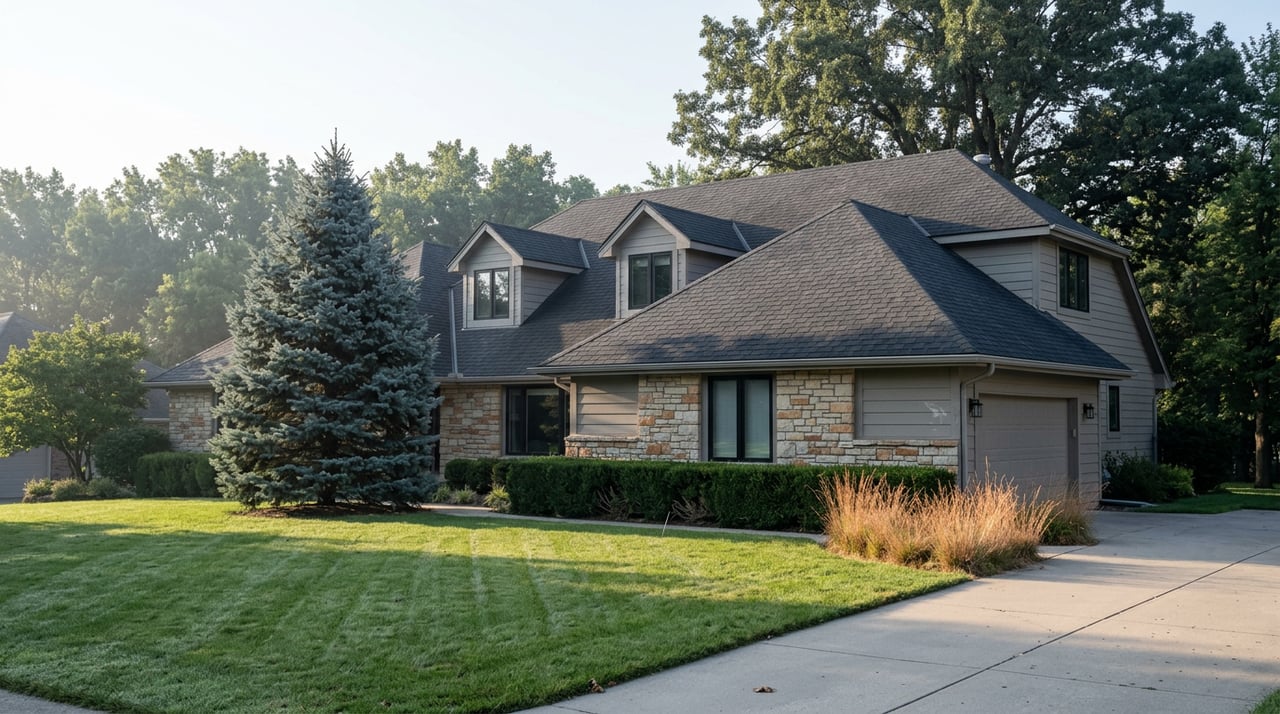
Say you bought your home in Cordera from the original owner back in 2019. If you list that same house in Briargate this fall, you now owe your buyer a stack of paperwork that, two years ago, would have been someone else's problem entirely. Under the rule in place through most of the last decade, metro district disclosure was a builder's obligation, tied to the first sale of a brand-new home. Resale sellers, the people reselling a house they'd already lived in, were specifically carved out. That carve-out is gone.
Colorado's House Bill 25-1219, signed by Governor Jared Polis on May 29, 2025, rewrote who has to hand a buyer the paperwork on a metropolitan district. The old rule, from a 2021 law, applied only to sellers of "newly constructed" homes inside a district, and it explicitly exempted subsequent sales from one homeowner to another. The new law drops that distinction. It now requires disclosures from all sellers of residential property inside a metropolitan district, whether the house was built last year or bought used three owners ago. If you own a home in Cordera, Wolf Ranch, or any other metro-district subdivision along the Briargate corridor, that change is now yours to manage at closing, not something you can assume your title company or the builder already handled.
What The Law Actually Requires Now
The disclosure isn't a single form. It's a set of documents and statements the seller has to get in front of the buyer before or at contract signing. Under HB25-1219, that packet has to include:
- Access to the district's most recent annual notice to electors, the yearly filing that lays out current mill levy, board contact information, and election details
- A copy of or link to the district's service plan, which spells out what the district is authorized to do and how much debt it can carry
- An explanation of the district's authority to issue debt, levy property taxes, and impose fees, rates, or penalties
- An estimate of the property taxes the district will levy for collection in the year of sale, and the law now requires this in an actual dollar figure, not a mill rate the buyer has to convert themselves
- A current certificate of taxes due or tax statement, so the buyer can see the full stack of overlapping taxing entities, not just the metro district's slice
- A written statement that certain actions the district is authorized to take could raise costs for residents living inside its boundaries
That last item matters more than it looks. It's not boilerplate. It's the legislature telling sellers to put in writing, in plain language, that the number on today's tax bill is not a ceiling.
Why Long-Term Owners Get Caught Off Guard
The exemption that used to protect resale sellers wasn't obscure. It was the headline of the 2021 law: builders selling brand-new homes had to disclose, everyone else didn't. Anyone who bought a resale home in Briargate over the last few years likely never saw this paperwork, because the seller wasn't required to produce it. That's exactly the group HB25-1219 now pulls in. If you've owned your home for five, ten, or twenty years and are listing it for the first time since Colorado tightened this law, you're the test case for a rule that didn't exist when you moved in.
This is a timing problem as much as a legal one. The certificate of taxes due has to be current as of the date you deliver it, which in practice means pulling it close to when you go under contract, not months in advance. The notice to electors is filed annually, so last year's copy may already be stale. Sellers who wait until inspection week to figure this out risk a delay that has nothing to do with the house itself and everything to do with paperwork nobody flagged early.
Briargate's Own District History Shows Why This Matters
Metro district status in Briargate isn't a fixed label. Colorado Springs currently has two remaining General Improvement Districts, and their history shows how much these designations shift over time. The Colorado Springs Briargate GID 2021 was created that year specifically to take over streetscape and landscaping maintenance that had previously been handled by the Briargate SIMD, an older maintenance district that predates it. Meanwhile, the original 1980 Briargate GID was dissolved in 2023, and the separate Spring Creek GID was dissolved in 2022, both because their bonded debt had finally been paid off.
That's three different district statuses touching the same neighborhood inside of three years: one district retiring its debt and closing, one new district standing up to take over a maintenance function, and ongoing metro districts inside newer Briargate subdivisions still collecting mill levies to repay infrastructure bonds. A document that accurately described your property's district status in 2022 may not describe it correctly today. That's precisely why the new law asks for current documents, not whatever the seller has in a drawer from the last time they thought about it.
HOA Dues And District Mill Levies Are Different Bills
Buyers touring Briargate often assume the HOA fee is the whole cost of the neighborhood's amenities and upkeep. In master-planned sections like Cordera and Wolf Ranch, it's one line among several.
| Cost Type | Who Collects It | What It Covers |
|---|---|---|
| HOA assessment | Homeowners association | Common area maintenance, snow removal, trash and recycling, community center operations |
| Metro district mill levy | Metropolitan district, via county tax bill | Repayment of bonds issued to build roads, water, sewer, and parks infrastructure |
| GID mill levy | City of Colorado Springs, acting as the district's board | Ongoing maintenance such as street landscaping and entry features |
Cordera's 2025 assessment ran $123 a month and covered common-area upkeep, snow removal, weekly trash service, insurance on shared property, and community center operation. That figure sits entirely separate from whatever mill levy the property's metro district charges through the county tax bill. One mill, as the El Paso County Treasurer's office explains, equals one dollar of tax for every thousand dollars of a property's assessed value, and that levy stacks on top of city, county, and school district mills already on the bill. A buyer comparing two similarly priced Briargate homes can end up with meaningfully different carrying costs depending on which district each one sits inside, which is exactly the gap this disclosure law is meant to close.
What To Do Before You List
If you're preparing to sell a Briargate home this year, the practical move is to find out early whether your address sits inside a metropolitan district and, if so, request a current certificate of taxes due from the county treasurer's office well before you go to market. Ask your district (most have maintained a public website since a 2021 transparency law, with the content requirements expanded further under the 2025 rule) for its most recent notice to electors and service plan link. If you're not sure whether your subdivision has a district at all, the Metro District Education Coalition's knowledge center is a neutral place to start, and the state's Division of Local Government keeps district filings on record as well.
Getting this assembled before you accept an offer means one less thing standing between contract and closing. It's also simply what the law now requires of you, whether the house is brand new or the one you've called home for a decade.
A Few Questions We Hear Often
Does this apply if my home is only in an HOA, with no metro district? No. The disclosure requirement under HB25-1219 applies specifically to properties inside a metropolitan district's boundaries. An HOA-only property, without a metro district, isn't subject to this particular law, though standard Colorado seller disclosures still apply.
How do I find out if my Briargate address is inside a metro district? Start with your title company, since district boundaries are recorded with the county clerk and recorder. The Colorado Division of Local Government's Local Government Information System also keeps district filings and service plans on record.
What if I genuinely don't know my district's current mill levy? Contact the district directly. Since 2025, districts required to maintain a website must also provide a way for residents to reach someone associated with the district during and after business hours specifically to answer these kinds of questions.
Selling a home inside one of Briargate's metro districts now comes with a paperwork obligation that didn't exist for resale sellers a few years ago, and getting it right takes local knowledge of which document applies to which district. The Elite Team has spent two decades working these subdivisions street by street and can help you sort out exactly what your closing requires. Schedule Your Free Market Consultation to get started.