Selling an acreage home in Monument is not the same as selling a house on a typical suburban lot. Buyers are looking at the home, of course, but they are also judging the land, the access, the utilities, the outbuildings, and how easy the property will be to own. If you want a smoother sale and a stronger first impression, it helps to prepare for both the house and the site. Let’s dive in.
Why Monument acreage prep matters
In Monument, acreage properties are often evaluated as a full package. That means buyers may pay close attention to the driveway, drainage, private well information, septic records, outbuildings, and wildfire mitigation, along with the interior condition of the home.
That broader checklist matters even more in El Paso County, where there are more than 2,000 centerline miles of roads and about half are gravel. The county notes that most gravel roads are graded on a six- to eight-week schedule, so road and driveway condition can shape a buyer’s impression before they ever reach your front door.
Start with access and first impressions
For many Monument acreage homes, the showing begins at the road. A rough driveway, overgrown approach, or poor drainage can make the property feel harder to maintain, even if the house itself is beautifully presented.
Before listing, look at the full route a buyer will take from the road to the home. You want the approach to feel safe, clear, and easy to understand.
Improve driveway condition
Simple access improvements can go a long way. Many sellers benefit from tackling visible issues that make the property feel neglected or difficult to navigate.
Focus on practical items like:
- Grading the driveway
- Repairing drainage ruts
- Clearing ditches
- Trimming brush near sight lines
- Checking gates and turnarounds
- Removing snow piles or debris that narrow the entry
These steps align with how El Paso County handles road maintenance and access expectations. They also help buyers picture using the property in every season.
Know what the county maintains
It is also important to know where county responsibility ends and owner responsibility begins. El Paso County says the homeowner is responsible for the culvert under a driveway and the 10 feet on either side.
The county also notes that crews trim vegetation where it limits sight lines or interferes with county maintenance. If a tree falls from private property, the county may clear the road for emergency access, but the owner remains responsible for the rest of the tree.
Be realistic about private road issues
If your property is accessed by a private road, a county-maintained conversion is usually not a quick pre-sale project. County guidance says road conversion can require a surveyor, engineer, contractor, drainage and stormwater work, and support from all parcels using that road.
In other words, treat major road-status changes as a long-term issue, not a last-minute listing fix. For most sellers, the better move is to make the existing access look clean, functional, and well cared for.
Build a utility packet before listing
Acreage buyers in Monument often ask detailed questions about water and wastewater systems. If you can answer those questions early and clearly, you build trust and reduce delays during the sale.
A simple utility packet can help buyers understand the property faster. It can also make inspections and lender questions feel more manageable.
Gather well records
The Colorado Division of Water Resources says a well permit file may include the allowable uses of the well, the original application, and available well construction and pump installation records. It also notes that complete well permit applications may take up to 49 days to process.
That timeline matters. If you wait until your home is under contract to look for well records, you may be creating unnecessary stress.
If your Monument acreage home uses a private well, try to gather:
- The well permit
- Any available pump installation records
- Any available well construction records
- Notes on the allowable uses of the well
The state also notes that wells in Denver Basin areas can have additional rules. That is one more reason to organize your records early.
Prepare for water testing questions
El Paso County Public Health says private well owners are responsible for the safety of the water drawn from their wells. It also states that the federal Safe Drinking Water Act does not apply to private wells.
For real estate transactions, the lender determines what testing is required. The county performs potable-water testing for private wells, and real estate agents, homeowners, or buyers can collect and deliver a sample using the county water kit.
Even if testing is not required before listing, being prepared for the question can help your sale move more smoothly.
Locate septic or OWTS records
For homes with septic systems, buyers will often want to know whether the system is permitted, serviceable, and easy to inspect. El Paso County Public Health says OWTS records can be viewed online through the Assessor’s Public Records Real Estate Property Search, although not all parcels have complete records on file.
The county also notes that it maintains a list of certified transfer-of-title inspectors for property sales. As of January 1, 2024, OWTS permit applications must be submitted by a licensed OWTS installer.
Before listing, it helps to gather:
- Any septic or OWTS permits you have
- Past service or maintenance records
- System location details
- Information that makes lids and access points easier to find
Make wildfire mitigation visible
Wildfire readiness is a major part of presenting a Monument acreage property well. Buyers often notice overgrown vegetation, clutter near buildings, or tree limbs near structures right away.
Good cleanup is not just about appearance. It helps show that the property has been maintained with local conditions in mind.
Use the Home Ignition Zone framework
Colorado State Forest Service guidance recommends defensible space around each structure on the property, including detached garages, storage buildings, and barns. Its Home Ignition Zone framework uses three distances:
- Zone 1: 0 to 5 feet
- Zone 2: 5 to 30 feet
- Zone 3: 30 to 100 feet
CSFS says Zone 1 should have no flammable material or vegetation. It also notes that this approach applies to grass-dominated landscapes, which is especially useful for acreage properties with a mix of grasses, trees, open space, and outbuildings.
Clean up around every structure
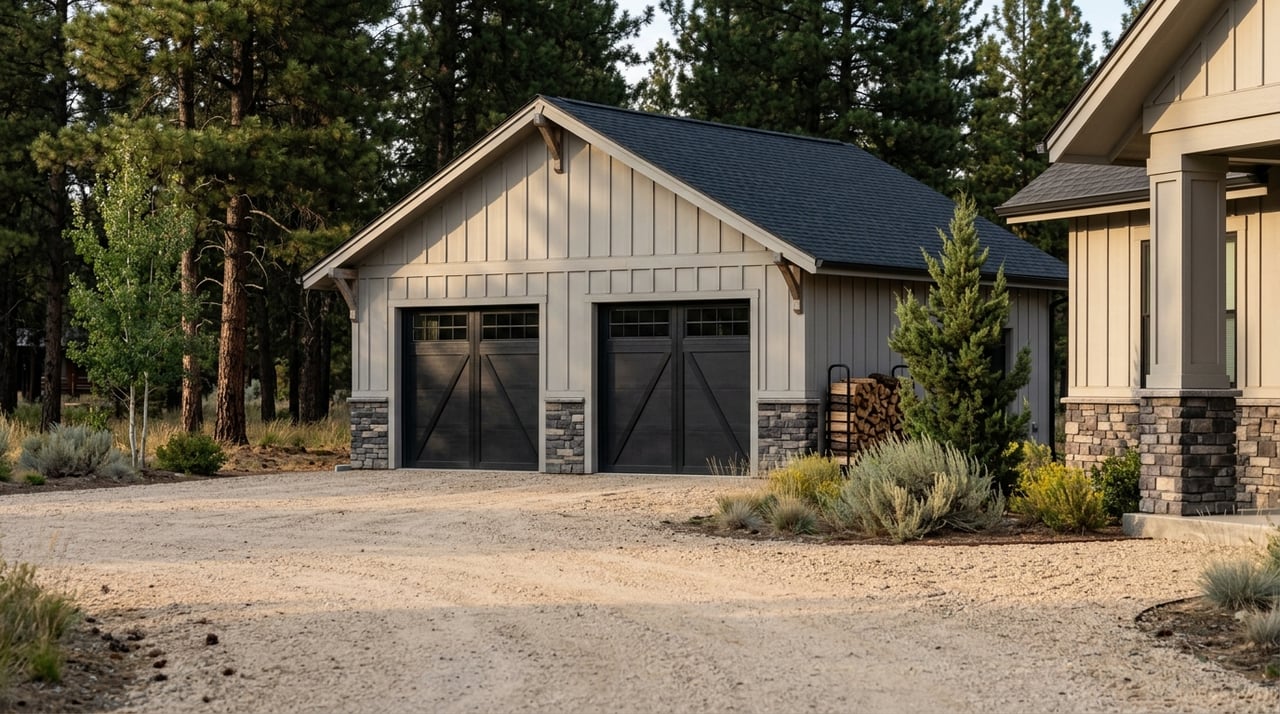
On acreage, buyers are not only looking at the main house. They are also assessing barns, sheds, detached garages, and storage areas.
El Paso County’s code for unincorporated wildland-urban interface areas focuses on factors such as access and evacuation, water supply, structure hardening, ignition potential, vegetation, slope, wind, and fire-spread conditions. For sellers, that means cleanup around buildings and along the driveway supports concerns that are important locally, not just cosmetically.
Useful pre-listing tasks may include:
- Removing flammable debris near structures
- Clearing dead vegetation
- Trimming back overgrowth near driveways and access routes
- Cleaning up around barns, sheds, and detached garages
- Making access routes feel open and usable
Organize outbuildings and land features
Acreage homes often come with more features than a standard residential property. That can be a huge advantage, but only if buyers can quickly understand what they are seeing.
If storage areas are crowded or utility features are hard to find, buyers may assume the property is more complicated than it really is. Clear organization helps the property feel manageable.
Make the property easy to read
Your goal is to reduce confusion during showings. Buyers should be able to understand where things are, what each structure is used for, and how the property functions.
Before listing, consider:
- Organizing barns and sheds
- Removing debris piles
- Separating equipment storage from living spaces
- Making well components, septic lids, propane tanks, and generators easy to locate
- Clearing paths to key site features
This kind of preparation helps buyers connect the dots between the home, the land, and the systems that support daily use.
Create one coordinated prep plan
Acreage properties usually show best when prep work is handled as one coordinated plan. Instead of tackling the house, driveway, wildfire cleanup, and utility documents as separate projects, it often works better to sequence them together.
That approach saves time, reduces repeated vendor visits, and makes the property feel consistently cared for from the first photo to the final showing.
Focus on the items buyers ask about most
Many Monument acreage buyers want answers to the same core questions. They are often trying to understand access, maintenance, utility systems, and overall ease of ownership.
Common buyer questions include:
- Is the driveway and road maintained year-round, or does the owner handle it?
- Is there a current well permit, recent water test information, and pump documentation?
- Is the septic system permitted and easy to inspect?
- How much defensible space exists around the home and outbuildings?
- Are there shared-road, gate, or access agreements to disclose?
If you prepare for these questions before listing, you can present the property with more confidence and fewer surprises.
Why local guidance helps with acreage sales
Selling a Monument acreage home often involves more moving parts than a typical residential listing. You may be coordinating site cleanup, staging, photography, drone footage, records gathering, and vendor scheduling at the same time.
That is where local experience can make a real difference. A thoughtful plan can help you prioritize the improvements that matter most, avoid unnecessary last-minute projects, and present the property in a way that makes sense to acreage buyers.
If you are getting ready to sell, Jeanne Guischard can help you create a smart prep strategy, coordinate polished listing presentation, and position your Monument acreage home for a successful launch.
FAQs
What should sellers fix first before listing a Monument acreage home?
- Start with access, drainage, visible cleanup, and utility records because buyers often notice the driveway, site condition, and well or septic documentation before they focus on smaller cosmetic details.
What well documents do buyers want for a Monument acreage property?
- Buyers often want to see the well permit, available well construction records, available pump installation records, and information about the allowable uses of the well.
What septic information matters when selling an acreage home in El Paso County?
- Buyers usually want to know whether the OWTS or septic system is permitted, where it is located, whether records are available, and whether it is easy to inspect during the sale process.
What wildfire cleanup helps a Monument property show better?
- Defensible space around the home and outbuildings, removal of flammable debris, and vegetation cleanup near structures and access routes can improve both presentation and buyer confidence.
What road and driveway issues affect acreage home showings in Monument?
- Rough grading, drainage ruts, blocked sight lines, narrow entries, and poorly maintained gates or turnarounds can all affect how easily buyers access and evaluate the property.